Bathroom Mold Removal Cost in Dallas, TX
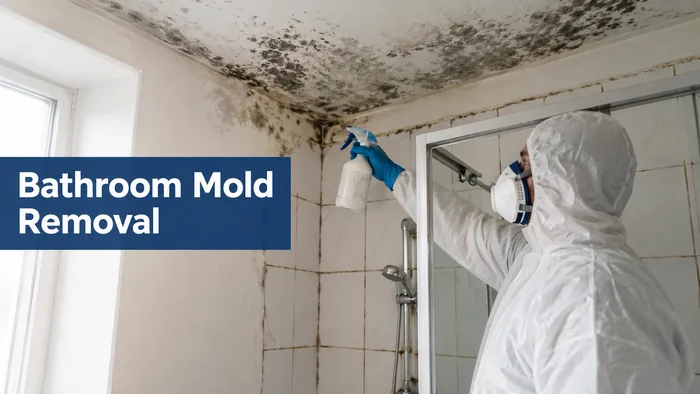
If you are comparing bathroom mold-remediation bids in Dallas, the first question is not “what is the average price?” It is “are these contractors pricing the same job?” Bathroom mold is often over-simplified. A small surface patch and a leak behind tile or a vanity are completely different projects, even though both are described as “bathroom mold.”
Start with the moisture path
Dallas has hot summers, strong storms, long air-conditioning seasons and intermittent humidity spikes. For this project, plausible pathways include roof leaks, condensate issues, bathroom plumbing, supply-line failures and water around exterior openings. None of those conditions proves mold is present, but they change where a competent inspection should look and which trade may need to repair the source.
In Dallas, large attic spaces and finished interiors can turn a small stain into a longer diagnostic path. That matters because access and responsibility can add labor even when the affected material itself is limited. Ask whether source diagnosis is included or whether the remediation contractor expects another trade to find the leak.
The contractor should connect the bathroom finding to a source hypothesis that fits Dallas: roof leaks, condensate issues, bathroom plumbing, supply-line failures and water around exterior openings. If the source remains a guess, the cost estimate is also partly a guess.
A Dallas bid should say whether source diagnosis is part of the remediation scope or belongs to a roofer, plumber, HVAC technician, exterior contractor or building management. That division affects the true project total.
Read the range as a scope signal
Treat the planning band as a prompt for better questions.
| Project shape | Planning reference | What should be clear before you sign |
|---|---|---|
| Surface growth with no wet porous material | $500–$2,000 | Affected components, source status and completion criteria. |
| Localized plumbing leak affecting drywall or vanity materials | $2,000–$5,000+ | Demolition, drying, equipment, disposal and rebuild assumptions. |
| Hidden wet backer, wall cavity or subfloor requiring demolition and rebuilding | Investigate before fixing a total | Rules for expanding the boundary and pricing change orders. |
Pressure-Test Your Dallas Quote
Enter location, affected area and project details before you compare proposals.
Compare My ProjectThe scope decisions behind the number
1. Whether growth is surface-only or behind finishes
This item affects whether the project stays localized or expands into demolition, drying and rebuilding. For this Dallas bathroom page, tie that decision to the written work boundary and the moisture source documented for this property.
2. Plumbing leaks around tubs, showers, toilets or supply lines
The contractor should identify how this condition will be verified instead of leaving it as an unpriced possibility. For this Dallas bathroom page, tie that decision to the written work boundary and the moisture source documented for this property.
3. Condition of drywall, tile backer, cabinets and subfloor
Two bids are not comparable if they make different assumptions about this line item. For this Dallas bathroom page, tie that decision to the written work boundary and the moisture source documented for this property.
4. Ventilation and drying conditions after demolition
Treat this as a yes-or-no scope decision where possible: inspect, clean, remove, replace or exclude. For this Dallas bathroom page, tie that decision to the written work boundary and the moisture source documented for this property.
What belongs inside this specific project
Bathroom mold is often over-simplified. A small surface patch and a leak behind tile or a vanity are completely different projects, even though both are described as “bathroom mold.” For this Dallas bathroom page, tie that decision to the written work boundary and the moisture source documented for this property.
| Component | Question to put in writing |
|---|---|
| ceiling or drywall | Who repairs the moisture source connected to this item? |
| tile or backer | What evidence closes this part of the job? |
| vanity or cabinets | Can this item trigger a change order? |
| plumbing source | Is reconstruction of this item included? |
| subfloor | What did the inspector actually observe? |
| exhaust ventilation | Is this item cleaned, removed, replaced or excluded? |
Scenario check before hiring
A narrow problem and an expanding concealed problem should never share the same assumptions. For this Dallas bathroom page, tie that decision to the written work boundary and the moisture source documented for this property.
Surface growth with no wet porous material
A defined boundary and limited material removal make this the easiest version to price in advance. In Dallas, ask how local moisture pathways and access conditions would change that assumption. For this Dallas bathroom page, tie that decision to the written work boundary and the moisture source documented for this property.
Localized plumbing leak affecting drywall or vanity materials
At this stage, hidden material, drying or access begins to drive the bill more than the visible surface. In Dallas, ask how local moisture pathways and access conditions would change that assumption. For this Dallas bathroom page, tie that decision to the written work boundary and the moisture source documented for this property.
Hidden wet backer, wall cavity or subfloor requiring demolition and rebuilding
This version needs written expansion rules because the final boundary cannot be known from the first photograph alone. In Dallas, ask how local moisture pathways and access conditions would change that assumption. For this Dallas bathroom page, tie that decision to the written work boundary and the moisture source documented for this property.
How to keep hidden conditions manageable
In Dallas, the first useful step is to connect the visible condition to a plausible moisture path rather than pricing the stain itself. The local backdrop includes hot summers, strong storms, long air-conditioning seasons and intermittent humidity spikes. For a bathroom project, the contractor should explain how those conditions relate to whether growth is surface-only or behind finishes. That explanation should identify what can be inspected without demolition, what requires access, and which finding would justify expanding the work boundary.
A Dallas proposal becomes more credible when it begins with the source candidates that actually fit the property. The most relevant pathways can include roof leaks, condensate issues, bathroom plumbing, supply-line failures and water around exterior openings. For this bathroom job, ask how the crew will distinguish active moisture from old staining and how plumbing leaks around tubs, showers, toilets or supply lines changes the cleaning-versus-removal decision. If the answer is only “we will treat the area,” the scope is still too vague to compare.
Hidden conditions matter in Dallas because large attic spaces and finished interiors can turn a small stain into a longer diagnostic path. That does not mean every property has a complicated problem. It means a contractor should state what happens if the initial opening exposes more wet material than expected. In a bathroom project, the proposal should address ceiling or drywall, tile or backer and vanity or cabinets separately so the homeowner can see which part is inspection, which part is remediation, and which part may become reconstruction.
Before work begins in Dallas, photograph the initial condition and keep a written map of the work area. The contractor should also document condition of drywall, tile backer, cabinets and subfloor and state how the decision will be made if concealed material is encountered. This matters because localized plumbing leak affecting drywall or vanity materials is materially different from surface growth with no wet porous material. A change order should describe the new finding, not merely announce that “more mold was found.”
Normalize the bids before comparing totals
| Bid section | What to verify | Why it matters |
|---|---|---|
| Work boundary | Exact rooms, assemblies or components | Avoids pricing an undefined area. |
| Material decisions | What is cleaned versus discarded | Separates treatment from demolition. |
| Air control | When containment or HEPA controls are used | Clarifies how the work zone is managed. |
| Source repair | Responsible trade and timing | Prevents the same moisture from returning. |
| Reconstruction | Included finishes and exclusions | Shows the full cost after remediation. |
A higher total may include rebuilding that another proposal leaves for later. For this Dallas bathroom page, tie that decision to the written work boundary and the moisture source documented for this property.
Estimate Your Dallas Project
Use the calculator as a starting benchmark, then compare it with the contractor’s written scope. For this Dallas bathroom page, tie that decision to the written work boundary and the moisture source documented for this property.
Estimate My CostWhy the final project total is larger than remediation
For Dallas, keep three categories visible: remediation, correction of the moisture source, and reconstruction. Ask whether source diagnosis is included or whether the remediation contractor expects another trade to find the leak. If a different trade owns the source, show that outside the remediation subtotal. If finishes are removed to reach bathroom components, show their replacement separately as well.
Set the rules for hidden conditions
Ask the contractor to state what finding can enlarge the initial Dallas work area, how that finding will be documented, who approves additional removal, and how the added rebuilding is priced. A photograph, moisture reading or clearly identified damaged material is more useful than a generic statement that “more mold was found.” For this Dallas bathroom page, tie that decision to the written work boundary and the moisture source documented for this property.
The questions that prevent scope confusion
- Ask whether source diagnosis is included or whether the remediation contractor expects another trade to find the leak. For this Dallas bathroom page, tie that decision to the written work boundary and the moisture source documented for this property. In Dallas, the contractor should also state how this point changes the specific bathroom scope before work proceeds.
- Ask the Dallas contractor to mark the initial work boundary in writing. For this Dallas bathroom page, tie that decision to the written work boundary and the moisture source documented for this property.
- Request a clean/remove/replace decision for the main bathroom components.
- Confirm who fixes the moisture source and whether remediation waits for that repair. For this Dallas bathroom page, tie that decision to the written work boundary and the moisture source documented for this property.
- Ask what evidence must be satisfied before Dallas reconstruction begins.
- Keep every reconstruction exclusion visible in the proposal.
- Request photographs of hidden conditions if the work boundary expands.
Frequently asked questions
Is $500–$2,000 a guaranteed Dallas price?
No. It is a planning reference for a defined bathroom scope. Access, materials, source repair and reconstruction can move a real Dallas project outside that band.
What makes a Dallas bathroom quote hard to compare?
Different assumptions about ceiling or drywall, tile or backer and reconstruction can make two totals describe different work. For this Dallas bathroom page, tie that decision to the written work boundary and the moisture source documented for this property.
Should the moisture source be repaired before remediation?
It should at least be identified and assigned. In Dallas, roof leaks, condensate issues, bathroom plumbing, supply-line failures and water around exterior openings can involve a trade separate from the remediation crew. For this Dallas bathroom page, tie that decision to the written work boundary and the moisture source documented for this property.
When should a Dallas homeowner expect a change order?
When documented hidden conditions expand the agreed boundary. The contract should state how that discovery is approved and priced. For this Dallas bathroom page, tie that decision to the written work boundary and the moisture source documented for this property.
Is square footage enough to price this project?
No. For bathroom work, access, component type, containment, removal, drying and rebuilding can matter as much as the visible area. For this Dallas bathroom page, tie that decision to the written work boundary and the moisture source documented for this property.
What does MoldCostCalculator.com add to the decision?
It gives a second planning reference before you accept a Dallas contractor quote. It does not inspect the property or set the final price. For this Dallas bathroom page, tie that decision to the written work boundary and the moisture source documented for this property.
What local issue should I ask about first in Dallas?
Ask whether source diagnosis is included or whether the remediation contractor expects another trade to find the leak. For this Dallas bathroom page, tie that decision to the written work boundary and the moisture source documented for this property. In Dallas, the contractor should also state how this point changes the specific bathroom scope before work proceeds.
Pressure-Test Your Dallas Quote
Enter location, affected area and project details before you compare proposals.
Compare My ProjectMore Texas mold cost guides
Use the state cluster to compare nearby markets and reach related project guides without returning to the main directory.