Water Damage and Mold Remediation Cost
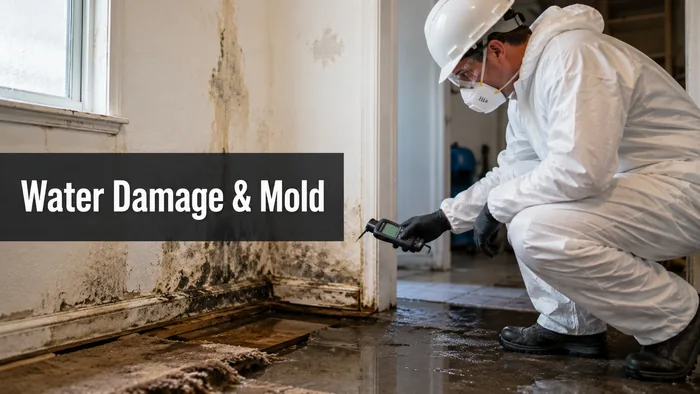
If you are researching mold remediation after leaks, flooding, or water damage, the useful question is not simply “what does mold removal cost?” The real question is what work is required to get from visible or suspected contamination to a clean, dry, repair-ready building assembly. That means identifying the affected area, understanding what materials can be cleaned versus removed, stopping the moisture source, controlling spread during work, and separating remediation from reconstruction.
This guide is designed for homeowners comparing quotes for wet drywall, flooring, insulation, cabinets, framing, crawl spaces, basements, and other water-affected assemblies. It uses current national cost references as a planning framework. It does not pretend that a national average can replace an on-site scope. Contractors in different markets can price the same physical job differently, and two quotes can look far apart simply because one includes demolition or rebuilding that the other excludes.
2026 cost range at a glance
| Project level | Planning range | What it can mean |
|---|---|---|
| Lower-complexity | $1,500–$3,500 | Smaller, easier-to-access work with limited demolition and a clearly identified moisture source. |
| Moderate | $3,500–$10,000 | More material removal, containment, equipment, labor, or multiple connected surfaces. |
| Higher-complexity | $10,000+ for major flooding or reconstruction | Large area, difficult access, hidden contamination, HVAC involvement, structural material, or significant rebuilding. |
The ranges above should be used to test whether a quote is broadly plausible, not to accuse a contractor of overcharging because their number is outside a national average. A higher quote can be justified by a more complete scope. A suspiciously low quote can simply omit containment, disposal, clearance, or reconstruction. Price without scope is mostly decorative arithmetic.
Estimate Your Situation Before Comparing Quotes
Use your location, affected area, mold location, and project details to get a more tailored starting estimate.
Calculate My Mold Remediation CostWhat changes the cost?
- Source and category of water
- How long materials stayed wet
- Drying equipment and monitoring
- Demolition and disposal
- Mold containment
- Reconstruction and plumbing/roof repairs
1. Area and depth of contamination
Visible surface area is only the beginning. Mold can be limited to a cleanable surface, or it can extend into drywall paper, insulation, wood framing, carpet backing, subfloor, duct liner, or other porous materials. The more layers that need to be opened, removed, bagged, cleaned, and rebuilt, the less useful a simple square-foot figure becomes.
2. Containment and air control
EPA remediation guidance distinguishes small, medium, and large contamination areas. Limited containment is generally associated with areas between 10 and 100 square feet, while larger projects can require more extensive controls and professional judgment. Containment, HEPA filtration, negative pressure, protective equipment, and cleaning are real labor and equipment costs, not theatrical props placed around a room to make the invoice look serious.
3. Access
An open wall in an empty room is easier to work on than a tight crawl space, steep attic, occupied kitchen, mechanical chase, or duct system. Restricted access increases setup time, slows material handling, and can require more careful containment. That is why two projects with identical visible square footage can have very different prices.
4. Moisture-source correction
Mold remediation without fixing the water source is an incomplete project. EPA guidance repeatedly emphasizes cleaning the mold and correcting the moisture problem. Depending on the job, that may involve plumbing, roofing, flashing, drainage, ventilation, condensation control, appliance repair, foundation seepage, or humidity management. Ask whether the remediation contractor is correcting the source or whether another trade is required.
5. Reconstruction
Many remediation proposals stop at “clean and ready for rebuild.” New drywall, paint, flooring, cabinets, insulation, trim, ceiling texture, or finish carpentry may be excluded. A second contractor may quote a larger number because it includes rebuilding. Always normalize the scopes before deciding which proposal is more expensive.
What should be included in a written quote?
For mold remediation after leaks, flooding, or water damage, a useful proposal should be specific enough that another contractor can understand what is being priced. Look for the work area, containment boundaries, materials to be removed, cleaning method, air-filtration equipment, disposal, moisture-source responsibility, whether contents are moved or cleaned, testing or clearance if any, and reconstruction exclusions.
| Quote item | Why it matters |
|---|---|
| Defined work area | Prevents a vague “mold treatment” scope that can expand later. |
| Containment plan | Shows how the contractor intends to limit migration of dust and spores. |
| Material removal list | Separates cleaning from demolition and disposal. |
| Moisture correction | Clarifies who fixes the leak, condensation, drainage, or humidity problem. |
| Clearance/testing | Shows whether post-remediation verification is part of the price. |
| Reconstruction | Prevents confusion about drywall, flooring, paint, trim, cabinets, and insulation. |
When a low quote can be misleading
A low number is not automatically a bargain. It may cover only antimicrobial application or surface cleaning while excluding demolition, containment, air scrubbing, disposal, or repair work. Ask the contractor to describe exactly what happens to contaminated porous materials and how the work area is cleaned after removal. The goal is not to buy the cheapest bottle of treatment. It is to buy a complete scope that addresses the contaminated material and the moisture condition that allowed growth in the first place.
When a high quote can be reasonable
A higher proposal can make sense when the contractor has identified hidden growth, wet insulation, structural material, complex containment, large-scale demolition, HVAC contamination, contents handling, or substantial reconstruction. Request photographs, moisture readings, scope notes, and unit quantities when possible. If a quote jumps dramatically after demolition, ask what newly discovered condition changed the scope.
How to compare two remediation estimates
- Compare the square footage or physical work area each contractor is addressing.
- Check whether both include the same demolition and disposal.
- Compare containment and air-filtration assumptions.
- Separate remediation from plumbing, roofing, drainage, HVAC repair, and rebuilding.
- Check whether inspection, sampling, or clearance is included.
- Compare warranties or written completion criteria only after the scopes match.
Turn the Range Into a Project Estimate
National averages are useful for orientation. Your own area, location, access, and material details are more useful for budgeting.
Get My Mold Cost EstimateFrequently asked questions
How much does water damage mold remediation cost cost?
A reasonable starting point is Often $1,500–$10,000+ depending on water extent and materials affected. That is a planning range, not a bid. The actual price depends on the affected materials, access, containment, demolition, moisture-source correction, and local labor.
What makes the price go up?
The biggest upward pressure usually comes from source and category of water, how long materials stayed wet, drying equipment and monitoring, demolition and disposal. Reconstruction after contaminated material is removed can also be a separate cost.
Is mold remediation priced by square foot?
Some contractors and cost guides use square-foot benchmarks, but real jobs also include fixed setup, containment, equipment, disposal, and project management costs. A small difficult job can cost more per square foot than a large open area.
Does the quote include repairs?
Not always. Ask whether the proposal covers remediation only or also includes leak repair, drywall, flooring, insulation, paint, trim, cabinetry, or other reconstruction. Comparing quotes without separating those scopes creates misleading price differences.
Do I need mold testing first?
Not every visible mold situation requires extensive testing, but testing or an independent assessment can be useful when the source is unclear, contamination is hidden, occupants need documentation, or a remediation plan requires verification.
How long does remediation take?
Small contained jobs may be completed quickly, while larger projects can require several workdays plus drying, clearance, and reconstruction. Scope, material removal, containment, and moisture correction determine the schedule more than the visible color of the mold.
Can I stay in the home during remediation?
That depends on the size and location of the work, containment, occupant sensitivity, and contractor safety plan. Large or multi-room projects are more likely to disrupt normal occupancy.
Does homeowners insurance pay for mold remediation?
Coverage depends on the policy and the cause of the moisture. Mold tied to a covered sudden water loss may be treated differently from long-term seepage, maintenance problems, or excluded causes. The policy and claim facts control.
Should I get more than one quote?
For a meaningful project, comparing two or three written scopes can expose differences in containment, demolition, cleaning method, testing, moisture correction, and reconstruction. Compare scope first and price second.
What should a remediation quote show?
A useful quote should identify the work area, containment approach, materials to remove or clean, air-filtration equipment, disposal, cleaning protocol, moisture-source responsibility, testing or clearance if included, and what reconstruction is excluded.
Can the final price exceed the estimate?
Yes. Hidden mold, wet insulation, wall-cavity damage, structural deterioration, inaccessible areas, or a larger-than-expected water source can expand the scope after demolition begins.
How can I estimate my own project?
Use the cost range on this page as a benchmark, then account for size, location, material type, access, containment, repairs, and your local market. The MoldCostCalculator assessment can turn those variables into a more specific starting estimate.
Sources and methodology
Planning ranges on this page are based on current national cost guides and EPA remediation guidance. Actual contractor prices can fall outside these ranges because access, demolition, disposal, containment, local labor, moisture correction, and reconstruction vary materially.
- HomeGuide: Mold Removal & Remediation Cost (2026)
- Angi: Mold Remediation Cost (2026)
- U.S. EPA: Mold Remediation Guidance
Last reviewed: August 30, 2026. See our cost methodology.